FadeWindows Mobile Professional, 2001
Seven years before it ever reached an iPhone, this story existed as a stylus-driven adventure for pocket computers — built for a market small enough that almost nobody outside it ever saw it.
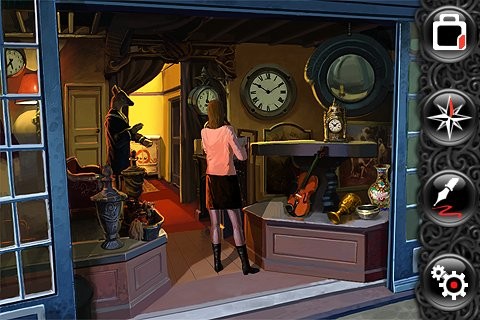
Visual DNA1112-era capture, style reference
A PocketPC mystery, thirteen years before its remake
Built for a stylus
Fade first appeared for the Windows Mobile Professional platform in 2001, at a time when "point-and-click" meant tapping a stylus against a resistive touchscreen rather than a fingertip. It was written and designed by a small team — the same people who, years later, would become Agharta Studio.
A story worth keeping
The game found a modest but genuine following within the PocketPC scene. Its creator has since described being especially attached to the story he wrote for it — attached enough that, more than a decade on, he chose to rebuild the whole thing rather than start something new.
How Fade became 1112
New platform, new structure
When the App Store opened in 2008, Agharta Studio saw the opportunity to bring the story back — this time engineered from the ground up for multi-touch. Rather than release it as one large game, the team split the story into episodes, effectively inventing an episodic format for adventure games before Telltale made the model famous.
A change of country
The story's setting moved too: Fade's original French backdrop became Jalonsville, New Jersey, a fictional small town somewhere between New York City and Washington, D.C. The core mystery — a headache-prone antiques dealer whose life quietly unravels — stayed intact.
Writing a mystery like a tree, not a line
According to the studio's own account, each episode began life as a "quest tree" — an entry point and an ending point plotted first, with turning points and branches filled in afterward. That structure became more ambitious with each release: episode three in particular carries multiple story branches that interweave without ever breaking continuity, letting players progress in more than one order without the seams showing.
A small detail worth noting: in a screenshot of the in-game phone's lock screen, the clock reads 11:12 — a quiet nod to the title baked directly into the interface.